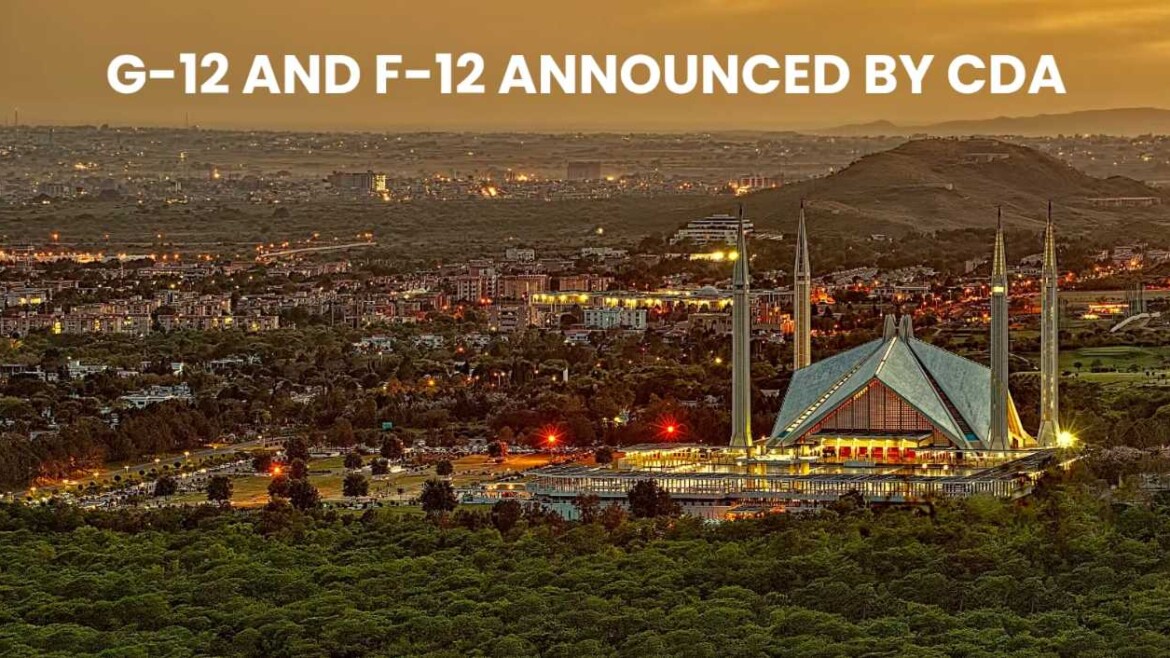
Islamabad’s real estate market has always rewarded those who moved early. Every sector that looked “upcoming” at launch, G-13, G-14, F-11, has since appreciated significantly, pricing out the investors who waited for certainty. Now the Federal Government Employees Housing Authority (FGEHA) is formally moving ahead with two new residential sectors, F-12 and G-12, and the early-mover window is open again.
This is not a rumour or a distant future plan. FGEHA’s executive board has already approved both projects. The layout plan for Sector F-12 has been finalized. Work on G-12’s layout is in its final stages. The Housing Authority was expected to formally open the sectors within April 2026, with balloting and plot allotments to follow once rates and planning matters are fully settled. For investors who understand Islamabad’s property cycle, the timeline alone is significant. Entry before development completion is where the real returns get locked in.
Where Are F-12 and G-12 Located?
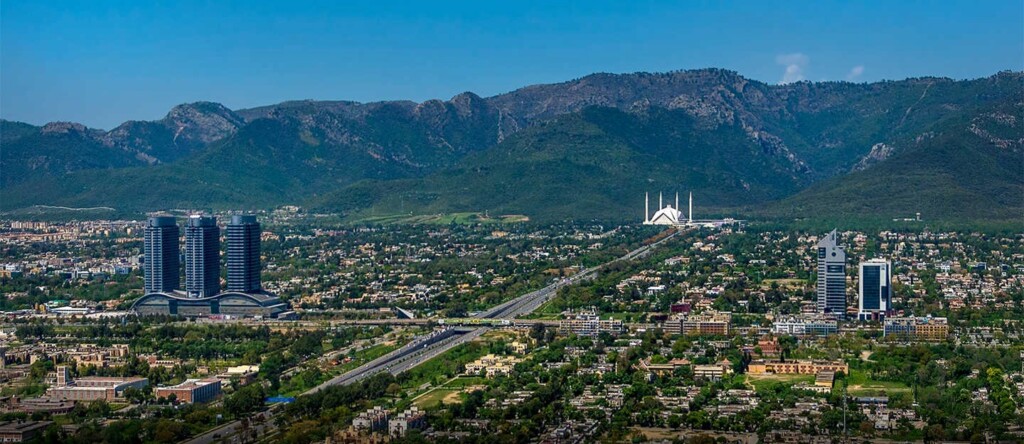
Location is the one factor in real estate that cannot be manufactured after the fact. Both F-12 and G-12 sit in Zone 1 of Islamabad, which is the capital’s most regulated, most developed, and most sought-after residential zone. Zone 1 is where supply is genuinely scarce. Every well-developed sector in this zone carries premium pricing, and for good reason: CDA’s urban planning standards here are strictly enforced, infrastructure quality is high, and demand never really cools.
Sector F-12 is positioned adjacent to the already well-established F-11 and G-11, with direct connectivity to major road networks including the Islamabad Expressway, M-1, and M-2 motorways. G-12 sits along Srinagar Highway, bordered by G-13 and G-14 to the south and connecting seamlessly toward Blue Area, Zero Point, and the New Islamabad International Airport. Both sectors are within commuting distance of the Pakistan Secretariat and the city’s main commercial and institutional hubs.
To put the location value in perspective: the surrounding developed sectors, F-11, G-11, G-13, are already heavily saturated. New land in Zone 1 at pre-development pricing is genuinely rare. F-12 and G-12 are among the last available opportunities in this corridor.
What Is Being Offered and Who Can Apply?
The residential plot categories available in both sectors cover a wide range of buyer profiles:
- 5 Marla (25×50 ft) for buyers entering at the most accessible price point
- 7 Marla (30×60 ft) for mid-range residential buyers
- 10 Marla (35×70 ft) for families planning to build larger homes
- 14 Marla (40×80 ft) offering spacious plots with strong appreciation potential
- 1 Kanal (50×90 ft) for high-value residential investment
The allocation quota structure is also notably inclusive. 40% of plots are reserved for overseas Pakistanis, 40% for government employees, and 20% for the general public. Overseas Pakistanis can apply using their POC, NICOP, Dual Nationality, or Resident Permit. For expats who have been sitting on savings abroad and looking for a verified, government-backed entry point into Islamabad’s property market, this quota structure was specifically designed with them in mind.
Applicants who submitted before the October 2023 deadline will be included in the upcoming balloting. Those who win a plot through the ballot have two payment options: a 20% down payment followed by 12 quarterly installments, or a 10% down payment with the option to sell the file on own-money for short-term gains. A 5% rebate applies for full payment upfront.
Why the Investment Case Is Strong Right Now
Zone 1 Land Has Nowhere to Go But Up
Islamabad’s real estate market has one structural reality that has not changed in decades: Zone 1 land supply is finite. As the city population grows, institutional expansion continues, and infrastructure improves, demand pressure on centrally located residential sectors compounds year on year. G-13 and G-14, which were in a development phase not long ago, now command prices that early buyers would have considered ambitious at the time of launch. F-12 and G-12 are entering the same trajectory.
Sector F-12 and G-12 are also backed by the federal government through FGEHA, which eliminates the developer credibility risk that plagues private housing schemes. Government-backed projects under CDA and FGEHA standards come with a level of legal and regulatory oversight that private societies simply cannot match. For cautious investors who have been burned by delayed private schemes, that government backing is a meaningful differentiator.
Islamabad’s Housing Deficit Is Real and Growing
Islamabad’s metropolitan population crossed approximately 1.3 million residents in 2025, up from 1.27 million in 2024. That is consistent annual population growth putting sustained pressure on already-limited housing inventory in the city’s prime zones. The federal government’s broader push to expand residential supply, with development already underway in F-14 and F-15 under the National Logistics Cell, reflects a deliberate policy response to this demand-supply gap. F-12 and G-12 are part of the same urban expansion agenda.
The broader context matters too. Pakistan’s real estate sector is valued at approximately US$2.08 trillion in 2025 and is projected to grow at 3.82% annually, reaching US$2.41 trillion by 2029. Interest rates at the State Bank have been cut to 11%, down from a peak of 22%, making property financing considerably more accessible than it was just two years ago. These are not sector-specific conditions. They are market-wide tailwinds that benefit any quality residential investment, and F-12 and G-12 sit right in the middle of them.
F-12 and G-12 at a glance:
- Location: Zone 1, Islamabad (highest-value residential zone)
- Developer: Federal Government Employees Housing Authority (FGEHA)
- Plot sizes: 5 Marla, 7 Marla, 10 Marla, 14 Marla, 1 Kanal
- Overseas Pakistani quota: 40%
- General public quota: 20%
- Payment: 20% down payment with 12 quarterly installments, or 10% with file-selling option
- Full payment discount: 5% rebate on upfront payment
- Status: Layout finalized (F-12), near-final (G-12). Executive board approved. Balloting pending.
Location Always Wins in Islamabad Real Estate Market
The pattern in Islamabad’s property market is consistent. Sectors that seem “in progress” at the point of balloting become unaffordable for most buyers within five to seven years of full development. E-12 was launched in 1989 and is still cited as a cautionary tale of delayed development, yet even with decades of delays it has held and grown in value because of its Zone 1 location. The lesson from E-12 is not that delays destroy value. The lesson is that location ultimately wins, and Zone 1 always delivers.
Investors who secured plots in G-13 and G-14 at development-stage pricing are sitting on assets that have appreciated substantially as those sectors matured into fully serviced residential communities. F-12 and G-12 are now at that same stage, with the additional advantage of a stronger institutional framework, better-funded development, and a government that has publicly committed to a faster execution timeline.
How Kashmir Marketing Supports Your Entry Here
Knowing an opportunity exists and knowing how to act on it are two different things. The FGEHA application and balloting process has specific eligibility criteria, documentation requirements, and quota-based allocation rules that vary depending on whether an applicant is a government employee, a general public buyer, or an overseas Pakistani. Getting the application right matters.
This is where Kashmir Marketing Pvt. Ltd becomes a practical resource. Ranked among the top real estate companies in Pakistan in 2026, Kashmir Marketing has been operating in this market since 2009 and has guided investors through multiple FGEHA and CDA sector launches over the years. The team includes legal experts, property investment consultants, and wealth advisors who understand the FGEHA process, the Zone 1 market dynamics, and the specific entry points that maximize return potential for different investor profiles.
For overseas Pakistanis managing the process remotely, Kashmir Marketing provides end-to-end support, from application documentation through balloting and beyond. The 40% overseas quota in F-12 and G-12 is specifically designed for expat investors, and the process is more straightforward with an experienced advisory partner handling the moving parts.
Broader Portfolio Access Alongside F-12 and G-12
For investors who want to compare F-12 and G-12 against other available options before committing, Kashmir Marketing’s portfolio covers Islamabad’s wider investment landscape including Capital Smart City, Bahria Town, DHA, Park View City, Gulberg, and Lakeshore City. Each project has a different risk-return profile. Having visibility across all of them, not just one or two, is what helps investors make genuinely informed decisions rather than reactive ones.
The advisory model at Kashmir Marketing is designed around matching investor goals to the right opportunity, with full transparency on timelines, pricing, and market outlook. For F-12 and G-12 specifically, the current window is pre-balloting, which historically represents the best risk-adjusted entry point in any government sector launch.
Reach Out Now for Islamabad-Specific Sector Details
F-12 and G-12 are not a speculative bet on an unproven developer in an unproven location. These are government-backed sectors in Islamabad’s most valuable residential zone, developed by FGEHA under CDA planning standards, with a transparent balloting process and a wide range of plot sizes. The surrounding sectors are already fully developed and expensive. The infrastructure and connectivity advantages are already in place. What is still available is the pricing advantage that comes with entering before full development is complete.
That window closes. It always does. Sectors that look like an “upcoming” opportunity from the outside become established and expensive from the inside before most people finish deliberating. The investors who consistently do well in Islamabad’s real estate market are the ones who recognize an early-cycle opportunity when the facts support it, and act before the market reprices the opportunity away.
For a full briefing on F-12 and G-12, application eligibility, current pricing, and how these sectors compare to other available investments in Islamabad, reach out to Kashmir Marketing Pvt. Ltd. The conversation is worth having before balloting announcements push demand into the next price tier. The best plots are still available. The only question is whether you take one.