
Anyone who regularly travels between Rawalpindi and Islamabad already understands the situation. A route that should take fifteen minutes somehow stretches into forty. Signals stay red too long. Crossings look like everyone parked their car and left.
Population of twin cities keeps growing while the road network struggles to keep up. Urban growth always exposes infrastructure weaknesses. Housing societies expand. Commercial plazas appear everywhere. Then traffic begins dictating how the city functions. That is exactly where ring roads enter the conversation.
Urban planners did not invent ring roads to make maps look impressive. They built them because roads in the city core alone cannot handle growing congestion. When development spreads without alternative routes, the consequences are predictable. Congestion increases. Travel time rises. Frustration reaches new heights. Now the twin cities stand at that point where expansion demands smarter road planning.
The Simple Idea Behind Ring Roads
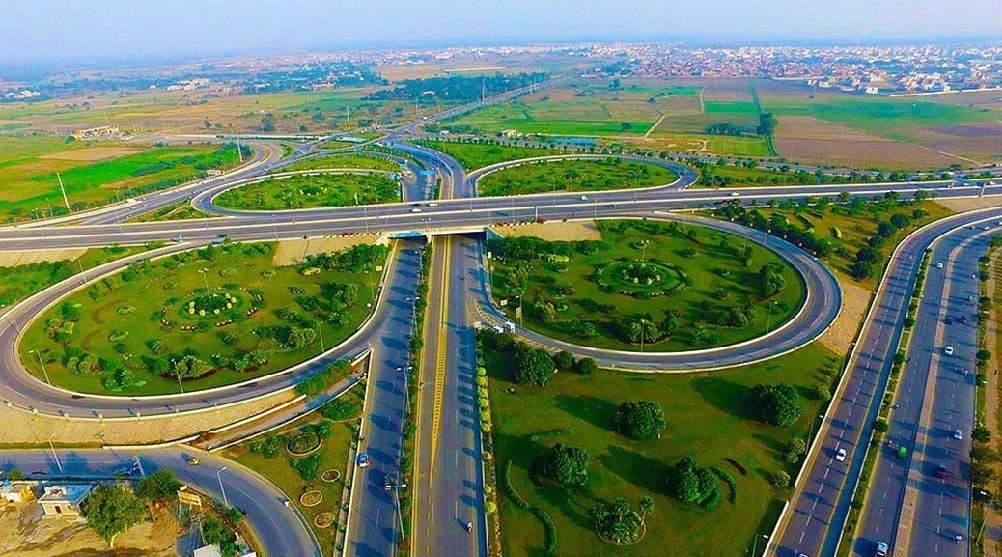
A ring road circles a city and connects major highways through a continuous outer corridor. Vehicles traveling across regions bypass crowded urban centers and move along the outer belt. Sounds simple. Yet the impact on real estate tends to be dramatic. Once a ring road becomes functional, several things start happening almost immediately.
Traffic Moves to the Outer Edge
Heavy vehicles prefer faster routes. Long distance trucks stop passing through inner city roads. That change alone reduces pressure on existing highways inside the city. Residents notice the difference quickly.
Interchanges Create New Growth Points
Every interchange becomes a gateway. Developers watch those locations carefully. Access roads start forming. Land nearby suddenly feels more valuable than it did a few years earlier. Property markets respond fast when accessibility improves.
Development Moves Beyond Old City Limits
Urban growth follows connectivity. Housing societies appear along new transport routes. Commercial zones start forming around key junctions. That pattern already happened in many parts of Pakistan.
Real Estate Always Follows Infrastructure
The real estate industry loves one thing above everything else. Accessibility. A well located road can change the destiny of entire neighborhoods. Investors who understand infrastructure trends usually move early.
Several major developments across Pakistan grew because they connected efficiently to major road networks. Projects such as Bahria Town or Capital Smart City gained attention partly due to strong connectivity planning.
Developers know that residents value convenience. Nobody enjoys spending half their life inside traffic jams. So whenever a major infrastructure corridor appears on the planning map, developers start calculating possibilities.
Developers Track Road Projects Carefully
Companies involved in real estate marketing and development often track infrastructure projects long before construction begins. That observation helped shape the strategy of Kashmir Marketing Pvt. Ltd, a company that entered Pakistan’s real estate sector in 2009. Over the years the firm witnessed how infrastructure projects changed investment patterns.
When Kashmir Marketing Pvt. Ltd introduced digital real estate marketing campaigns in 2016, buyers started receiving far more information about project locations and connectivity advantages. Investors could analyze road access, surrounding developments, and long term growth prospects before making decisions.
By 2022 Kashmir Marketing Pvt. Ltd expanded beyond marketing into development activities as well. That transition made infrastructure analysis even more important because project planning relies heavily on transport connectivity. Ring roads quickly became a key part of those discussions.
The Master Planning Perspective
Cities cannot expand endlessly without structure. Eventually planners need frameworks that guide growth. Islamabad already operates through a structured master planning approach. Rawalpindi continues adapting its planning strategies to handle rapid population growth. Ring roads help planners achieve several goals at once.
Controlled Urban Expansion
A circular road network spreads development across different sectors. Instead of forcing growth inside crowded zones, housing societies begin appearing along the outer corridor. That shift helps balance population distribution.
Improved Transport Efficiency
Regional traffic bypasses inner city roads. Commuters traveling across provinces gain quicker routes. Local travel becomes smoother.
Emerging Commercial Hubs
Major road networks attract businesses. Logistics centers, warehouses, and commercial hubs prefer locations with direct highway access. Developers usually anticipate that shift before construction finishes.
How Investors Capitalize on Ring Road Opportunities
Property investors rarely ignore infrastructure projects. Some rush to purchase land the moment a road project receives approval. Others wait until visible development appears. A third group prefers entering the market once the road becomes fully operational.
Ring roads create opportunities across all three stages. Real estate advisors working with Kashmir Marketing Pvt. Ltd frequently observe this behavior. Investors often ask a similar question. Which projects sit closest to future interchanges. That question alone reveals how strongly infrastructure influences property decisions.
Land Near Ring Roads Sees Rising Value
Peripheral land around the twin cities still offers development potential. Large portions remain underutilized despite rapid urban growth. Ring roads change that situation.
Once connectivity improves, previously ignored land begins attracting developers. Housing societies plan residential sectors, commercial markets, and recreational areas along new road corridors.
Several existing housing developments around the region already highlight their proximity to major road networks. Projects such as Faisal Town, Top City, and Silver City often appear in property discussions for this exact reason. Buyers prefer locations that promise easy travel between home, workplace, and commercial areas.
Lifestyle Gets a Major Boost
The conversation about ring roads often focuses on investment potential. Daily life improvements deserve equal attention. Faster outer corridors reduce commuting stress. Residents living slightly outside city centers can still reach offices or schools without battling endless traffic signals. Urban planning also benefits.
New communities gain space for parks, wider roads, and organized commercial areas. Developers can design neighborhoods with modern layouts instead of squeezing projects into overcrowded zones. Quality of living gradually improves as infrastructure spreads development more evenly.
Some Investors Still Have Doubts
Large infrastructure projects rarely escape skepticism. Investors often question construction timelines or future development around the corridor. Those concerns remain reasonable.
Infrastructure projects require funding approvals, land acquisition, and construction phases that can stretch over several years. Property speculation sometimes runs ahead of actual development. That said, historical patterns remain clear.
Cities grow along transportation corridors. Property markets usually follow infrastructure once connectivity becomes reliable. Experienced consultants at Kashmir Marketing Pvt. Ltd often emphasize patience when evaluating infrastructure driven investments. Proper analysis usually reveals which locations hold genuine long term value.
The Next Phase of Urban Growth
Pakistan’s major cities continue expanding rapidly. Population growth pushes development toward outer zones. Infrastructure projects like ring roads help manage that expansion more intelligently.
Urban congestion decreases when heavy traffic moves along bypass routes. Developers gain space to build organized residential communities. Businesses gain access to transport corridors that support logistics and commerce. The twin cities already function as a combined metropolitan region. Efficient connectivity around them will shape the next phase of urban development.

Contact Kashmir Marketing Experts Before Investing
Ultimately, those ring roads around Islamabad and Rawalpindi represent much more than simply new lanes of asphalt. They quietly signal where the cities will grow next, where smart money flows, and how much easier (or harder) daily life becomes for everyone here. Real estate doesn’t work in isolation, major infrastructure lays down the law for years to come.
The companies that spot this connection early don’t just survive market shifts; they ride them. For the last fifteen years Kashmir Marketing Pvt. Ltd has watched exactly how these kinds of corridors turn ordinary land into goldmines across Pakistan. That hard-earned pattern recognition still drives every project we take on today, from marketing to full-scale development.
Don’t wait for the crowd to catch on and push prices out of reach. Contact Kashmir Marketing experts before investing and get positioned on the right side of the ring road wave before the best spots are gone and you’re left paying tomorrow’s prices today.

